
By Serafina Lalany
Most founders can’t run an auction. But what if the ecosystem could?
There’s a common piece of advice founders get when raising capital: run an auction. Stack your meetings. Build competitive tension. Drive your price. It’s a tactic borrowed from the world of M&A and refined in the backchannels of Sand Hill Road.
And it works—if you’re already in the room.
It’s like telling someone to launch an e-commerce business without giving them the internet.
But the truth is, most founders don’t have the luxury of an auction. Not because their companies aren’t good, but because the architecture of their ecosystem doesn’t allow for it. There’s no density of capital. No critical mass of VCs circling at once. No reliable way to get seen by the right people, at the right time, in the right frame of mind.
So instead of a fast, high-signal fundraising process, you get the opposite: scattered meetings, slow feedback loops, and a constant feeling that you’re just one warm intro behind where you need to be.
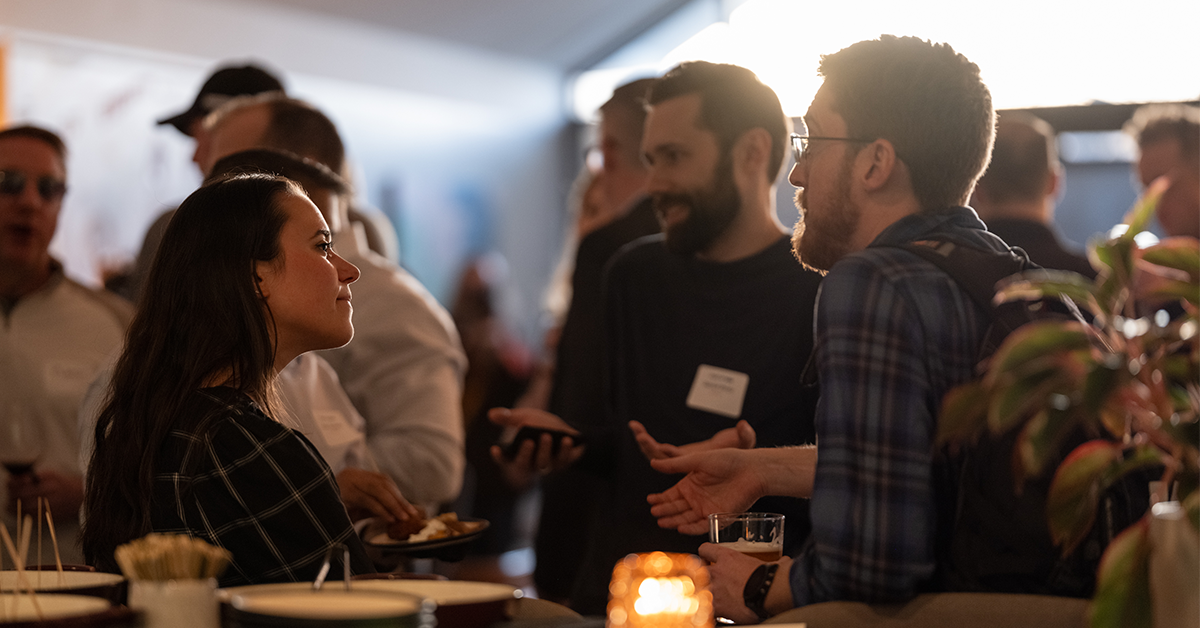
What we’ve been building with VC Immersions is a response to that problem—but also a challenge to the idea that auctions are only for the connected few.
Because if you strip away the performance aspect, what’s an auction really?
- A high-quality, high-velocity set of meetings with decision-makers who are actually ready to move.
- A compressed process that lets founders calibrate demand and pick the right partner—not just the first one who says yes.
- A moment in time where attention, capital, and conviction converge.
We didn’t try to recreate that dynamic through a pitch competition or demo day. We built it as infrastructure—on purpose, and at scale.
Over the past year, we’ve run this play with more than 200 startups from across the country. Dozens of VCs have traveled to Northwest Arkansas to participate, not because we asked nicely—but because the pipeline was real. The process was efficient. And the founders were ones they wouldn’t have met otherwise.

Because if you’re a founder in a place like Arkansas, or Kansas City, or Nashville, you don’t get to run an auction. You’re lucky if you can get five conversations with funds that even invest at your stage. And if you’re building something slightly non-obvious, forget about it.
That’s not a knock on founders. It’s a knock on the system.
The problem isn’t that people are giving bad advice. It’s that the advice is built for a different topology. Running an auction is a power move in a market where relationships are dense and capital is abundant. But most of the country doesn’t look like that. Most of the country is still trying to build the on-ramps.
So we built something else.
We built a system that creates those conditions, even in places that have historically been off the radar. Because that’s the reality for most early-stage founders in the middle of the country. It’s not that they lack ambition, traction, or even fundable businesses. It’s that they lack the dense infrastructure—of capital, community, and connectivity—that makes an auction even possible.
Since launch, VC Immersions has:
- Facilitated 500+ founder–VC meetings
- Diligenced 200+ early-stage startups across 30+ states
- Helped VCs deploy $14M in first checks—many into companies that would’ve never made it onto their radar otherwise
This isn’t just matchmaking. It’s infrastructure.
It works because we don’t just optimize for heat. We optimize for fit. And unlike the traditional auction model, which rewards the most connected and polished fundraisers, VC Immersions rewards the most fundable businesses—regardless of zip code.
Auctions are zero-sum. Infrastructure compounds.
This isn’t just a better experience. It’s a better model.

And this is the part most people miss: the reason founders get stuck isn’t just capital. It’s surface area. You can’t manufacture demand if no one knows you exist. You can’t run a process if you can’t get a foot in the door.
The auction model only works once the machine is already warm. We’re trying to build the part that gets it there.
And that raises a bigger question:
What if founders didn’t have to run the process alone?
What if the ecosystem ran it with them—or for them?
What if we played the role of both analyst and associate for the funds, and investor relations for the founders? What if we curated for fit, delivered early memos, and structured conversations to happen all at once—so the burden of creating momentum didn’t fall entirely on the founder?
We know the current model is inefficient. Founders are pulled out of the business for months at a time. Investors spend too much time chasing low-signal meetings. Rounds take longer than they should. And good companies raise later than they need to—or not at all.
But if we re-engineered the system—if we built infrastructure that intentionally created the conditions for clarity and speed—maybe founders wouldn’t need to manufacture urgency. Maybe they could get back to building faster.
We didn’t start out trying to answer that question.
But now that we’ve seen what’s possible, it’s the only one that matters.